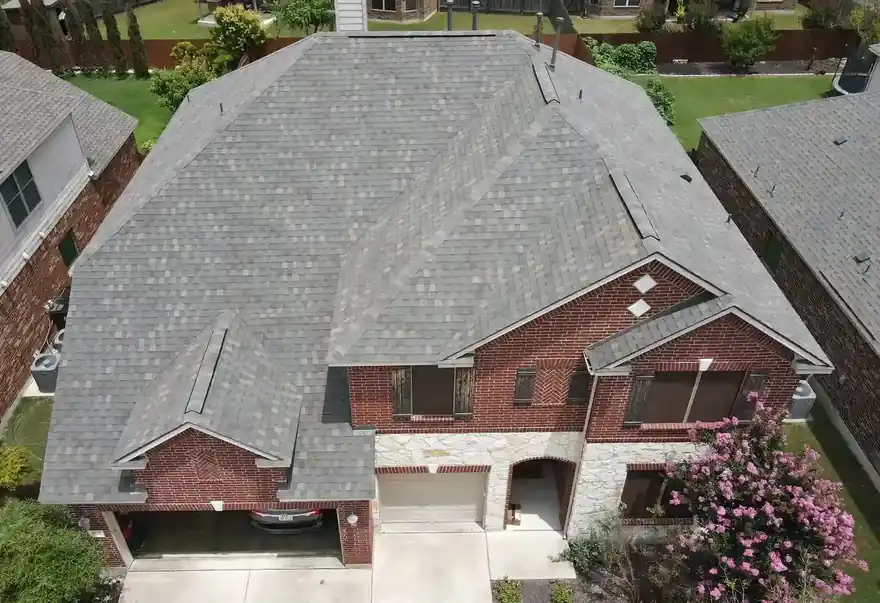
What gives out on a house roof in East Texas
A Tyler roof gets hit from three sides. Hail bruises the shingle mat and knocks granules loose. Straight-line wind lifts tabs until the sealant strip lets go and they blow off. Summer heat and humidity do the slow work, cooking asphalt until it curls and cracks around nails.
Most leaks we are called to don't start in the middle of a shingle. They start where the roof was built wrong or has simply worn out: flashing that was never lapped properly, a missing drip edge, a vent boot dried to a crumble. You can have a roof that looks fine from the driveway and is already taking water at the decking.
That's why the first question on any residential job is never what to sell you. It's whether the roof you have can still be repaired, or whether patching it is just paying for the same leak twice.
How the Steele crew works a house roof
An inspector walks the whole roof, not just the slope facing the street. He marks hail hits in chalk, checks the flashing, the drip edges and the venting, photographs what he finds, and sends you a written assessment. It's free, you don't have to be home, and it doesn't commit you to anything.
If the answer is replacement, the crew strips the roof to bare decking and looks at what's underneath before anything new goes on. Soft or rotted decking gets replaced, synthetic underlayment goes down, then the new system. When the tear-off turns up damage nobody could see from above, a change order explains what changed and why.
We handle the job from first walk to final cleanup, and we also roof new construction. When the work is a claim, we work from your adjuster's scope and walk the roof with the adjuster. Steele is a Tyler company, not a storm chasing crew, and the plan is to be here long after the job is done.
After the new roof goes on
A finished roof still needs a look every spring and fall. Loose nails, tired sealant and cracked boots creep in without showing from the ground, and an East Texas storm will find every one of them. The Steele Shield plan puts an inspector back on your roof twice a year, and the details are on the Steele Shield page.
If a storm comes through, call before you climb up there yourself. A free inspection after hail takes under an hour, and it's far cheaper to learn the roof is fine than to find out in the next rain. For anything leaking right now, emergency tarping gets water off your ceiling the same day while we work out the fix.