What happens when a storm opens the roof
East Texas weather turns on you fast: sun and blue sky one minute, thunder and lightning the next. The roof is the first line of defense, and when it gives, the roof is not the only thing at risk. Water gets in, and the inside of the home or building is next.
The damage can come from a tornado or wind, hail, tree debris, lightning, long-term water, even squirrels. It can be as ordinary as a misplaced shingle or a water stain, or as serious as a gaping hole after a tornado.
Minor roof damage today can turn into a much larger, more costly roof and interior problem tomorrow. Mold, mildew, water stains and rotten materials all start with a small amount of water left unattended.
How the Steele crew handles an emergency roof
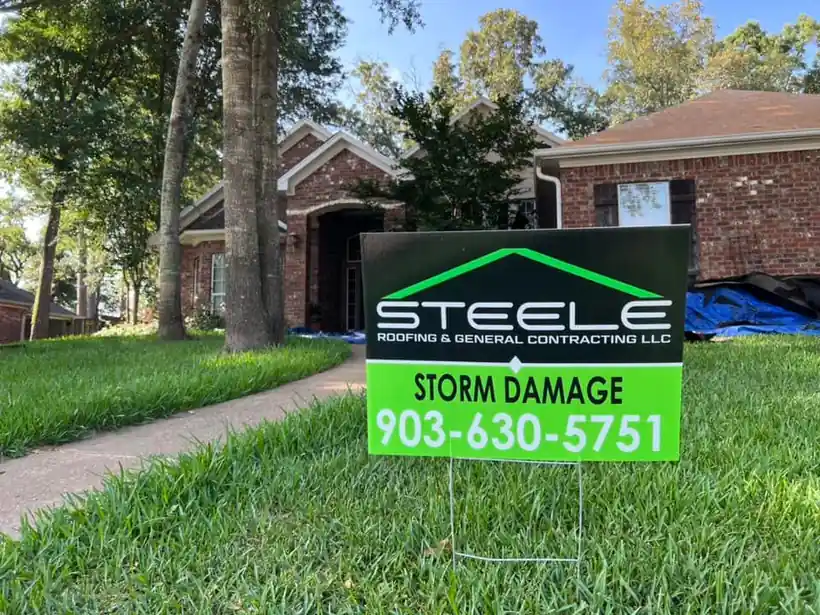
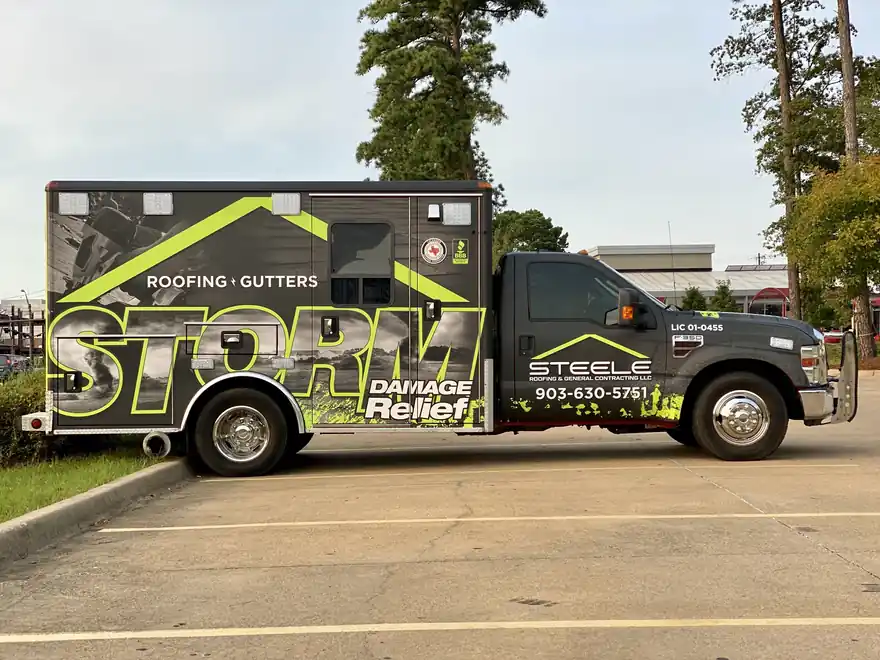
Our experienced contractors take care of the immediate problem first, which on an open roof means keeping water out of the building. Then, once the weather settles, we do a thorough inspection and give you a written report. Homes and commercial buildings get the same approach.
A tarp is temporary cover, not a repair. It buys you time to deal with your insurance company and plan the proper repair or replacement. Our free inspection looks at the whole roof and sets out the next steps, from emergency tarping to the complete course of repair.
Please don't climb up and try it yourself. Fallen limbs, insecure boards and wet decking are hazards a trained crew expects. The office on Hwy 69 South is open Monday to Friday, 8 to 5, and the number is (903) 630-5751.
What comes after the tarp
Schedule the inspection and the proper repair while the tarp holds. If this is storm damage, the insurance process starts now: photos and video before any cleanup, then a call to your carrier for guidance on how to proceed.
From the written inspection we go to a repair or a full replacement, and your project manager works with the adjuster along the way. Our storm restoration page walks through how that goes, step by step.
Then prevent the next one. Have the roof inspected every spring or fall and after any severe weather. A tarp that stays on for months is no substitute for a roof, so don't let a stopgap become the plan.